
Thermostats are often overlooked, but they are arguably one of the most critical components of your home’s heating, ventilation, and air conditioning (HVAC) system. These small gadgets are behind your house temperature regulation, comfort, and energy consumption optimization.
Despite their humble size and appearance, thermostats are technical wonders that burn and cool to perfect the temperature in your home.
Whether it’s a scorching day in the middle of summer or a chilly winter night, your thermostat is working behind the scenes to keep you comfortable. Knowing how a thermostat works in your home can be valuable in learning how to improve efficiency, troubleshoot issues, and make better choices about regulating temperature.
But how exactly do thermostats work? And what kinds of thermostats are available today?
This article explores the anatomy of thermostats, covering their history, how they work, and how they’ve evolved into smart devices.
The Basic Functionality of a Thermostat
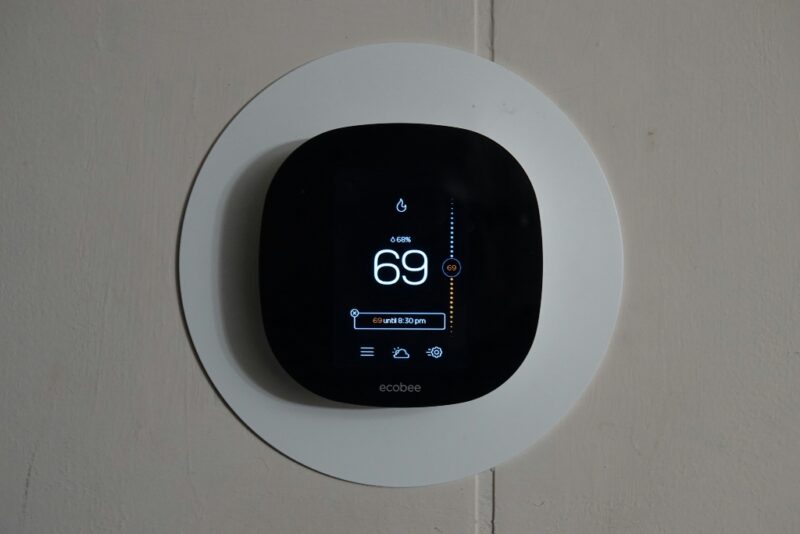
A thermostat is, at its core, a temperature-regulating device designed to control the operation of your HVAC system. It senses the room or space temperature and tells the heating or cooling system to turn on or off as needed to maintain the desired temperature.
This control relationship between the thermostat and HVAC system can be seen as a basic example of a feedback loop; the thermostat “observes” the environment and responds with appropriate corrective action.
Therefore, understanding thermostat functionality is key to appreciating how this process ensures consistent comfort and energy efficiency in your home or workspace.
The Mechanism Behind Temperature Sensing
Thermostats use a variety of sensors to detect temperature changes in the air.
The most widely used type is one made of two bimetallic strips joined together. Due to the different rates of expansion and contraction of the metals, the strip bends as it is heated or cooled. This flexing causes a switch to be thrown that starts or stops the HVAC unit. While this type of design has largely been superseded by modern digital sensors, it remains a dependable, straightforward technology common in many older thermostats.
Another type of sensor frequently used in thermostats nowadays is the thermistor, a component in which resistance varies depending on temperature. It is faster and more accurate than bimetallic strips and is now more common in modern digital thermostats.
These sensors are constantly giving feedback to the thermostat’s internal circuit, which in turn sends precise commands to the heating or AC system.
Types of Thermostats
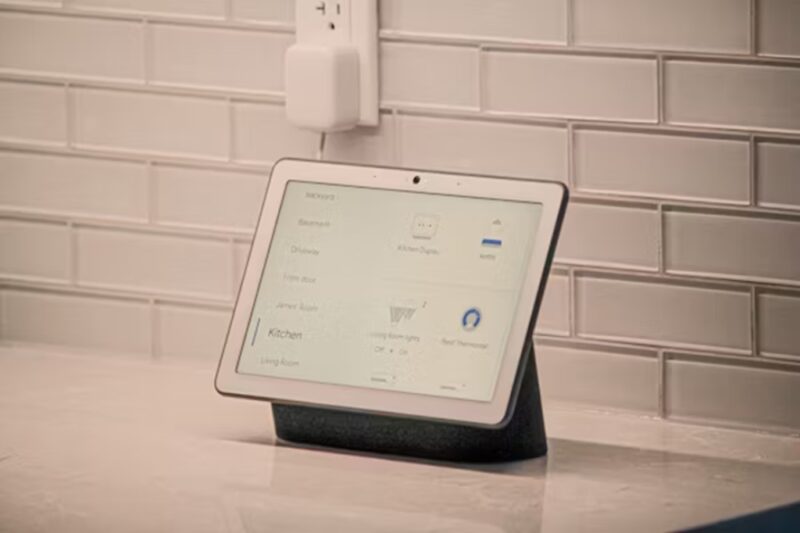
Thermostats vary in models according to their features as well as functionality. Some of the most common types include:
1) Mechanical Thermostats
The oldest and simplest is the mechanical thermostat. They include a bimetallic strip to sense temperature changes and turn the heating and cooling system on and off. Usually, such devices are for analogue heating systems where you can actually set the temperature by hand.
While mechanical thermostats are easy to operate and are a cheaper option, they are not as precise and efficient as modern digital or smart thermostats available today.
2) Digital Thermostats
Digital thermostats are commonly considered to be more sensitive than mechanical ones. These thermostats employ electronic temperature sensors (such as thermistors) for temperature detection. The readings are then displayed on the LED screen for the user to dial the target temperature more accurately.
Some digital thermostats can be programmed to turn on and off at certain times of the day or week, based on your pattern of life and desired temperature.
3) Programmable Thermostats
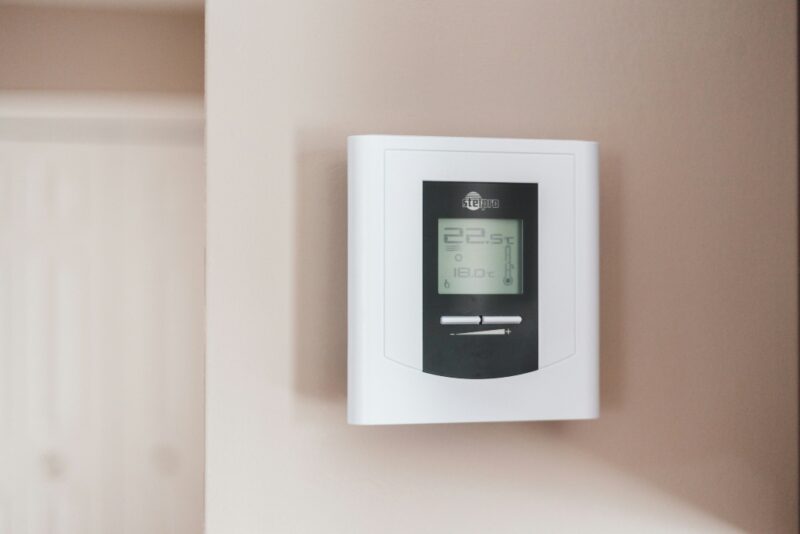
Digital thermostats are a step above programmable thermostats, permitting the scheduling of temperatures. Other thermostats are programmable, and this means that the thermostat can be adjusted to vary the temperature according to schedules controlled by the user during the course of the day. A programmable thermostat, for instance, might be programmed to lower the temperature when you’re sleeping or away at work and raise it when you wake up or return home.
Some digital thermostats are “energy management systems” compatible and can enable energy-saving programming and receive system alerts at home. Since they heat or cool your home only when necessary, they can significantly cut energy consumption and utility bills.
4) Smart Thermostats
Smart thermostats are the most advanced and feature-rich types of thermostats available today. These are internet-connected thermostats that you can control using a smartphone app or with voice commands through Amazon Alexa, Google Assistant, or Apple’s Siri. Smart thermostats learn your schedule and will create a temperature schedule around it.
A central selling point of smart thermostats is that they can “learn” from how they are used. For example, a smart thermostat can teach you your preferred time to lower the thermostat and do so automatically without your intervention.
And most smart thermostats can also be operated remotely, allowing you to adjust the temperature from anywhere, whether at work, on vacation, or even in bed.
Smart thermostats are also equipped with sensors that can detect whether a room is occupied or not, allowing the system to reduce energy usage when nobody is home. This high level of control does more to save energy and give you comfort.
How Thermostats Communicate with HVAC Systems
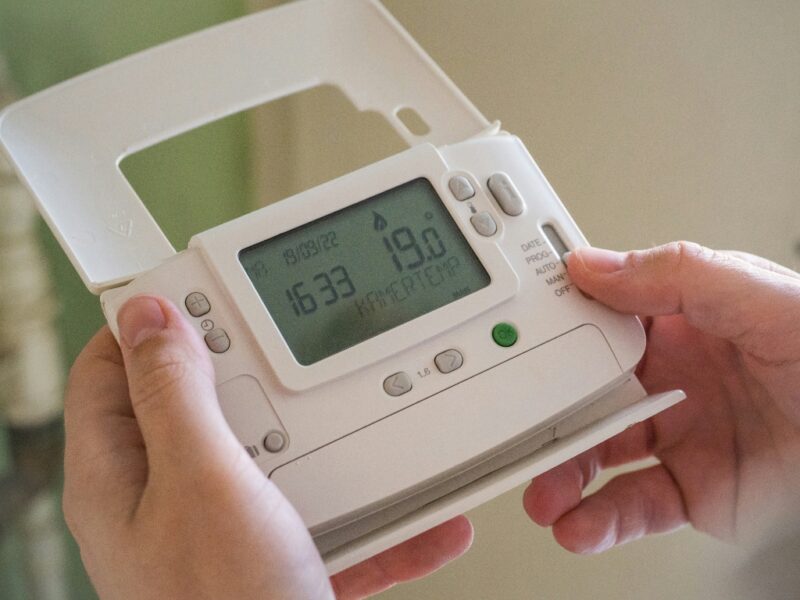
For a thermostat to regulate the temperature, it has to be able to communicate with the HVAC system. The process begins when the thermostat senses that the temperature has deviated from the preset level. Once it detects the change, it triggers a signal to start the heating or cooling system, depending on whether the temperature needs to increase or decrease.
In older, mechanical thermostats, these changes were performed with simple electrical connections. It contains a bimetallic strip that would close a switch when it was hot enough (or cool enough) so that heating or cooling could be applied. In modern systems, digital thermostats use a variety of sensors, relays, and electronic circuits to send precise signals to the HVAC system.
Smart thermostats typically communicate with the HVAC system via wireless communication such as Wi-Fi or Bluetooth. This means homeowners can control their HVAC systems from anywhere using a smartphone app. The communication between the thermostat and the HVAC system can be managed in real-time, with users receiving alerts or updates on system status.
Wrapping Up How Thermostats Work
When it comes to making our homes comfortable, efficient, and sustainable, some tiny elements play a huge role.
While thermostats might seem like simple little devices that control the temperature, they do quite a bit, relying on precise sensors, advanced circuitry, and communication to maintain a consistent indoor climate. Whether you have a basic mechanical thermostat or a fancy new smart one, it’s all about keeping just the right temperature in your home without wasting energy.
Given how quickly technology evolves, thermostats can only get more creative. Smart thermostats are already revolutionizing how we control the climate in our homes, saving energy, improving comfort, and reducing costs.
Please share how thermostats work and the technology behind them with your friends and family.